
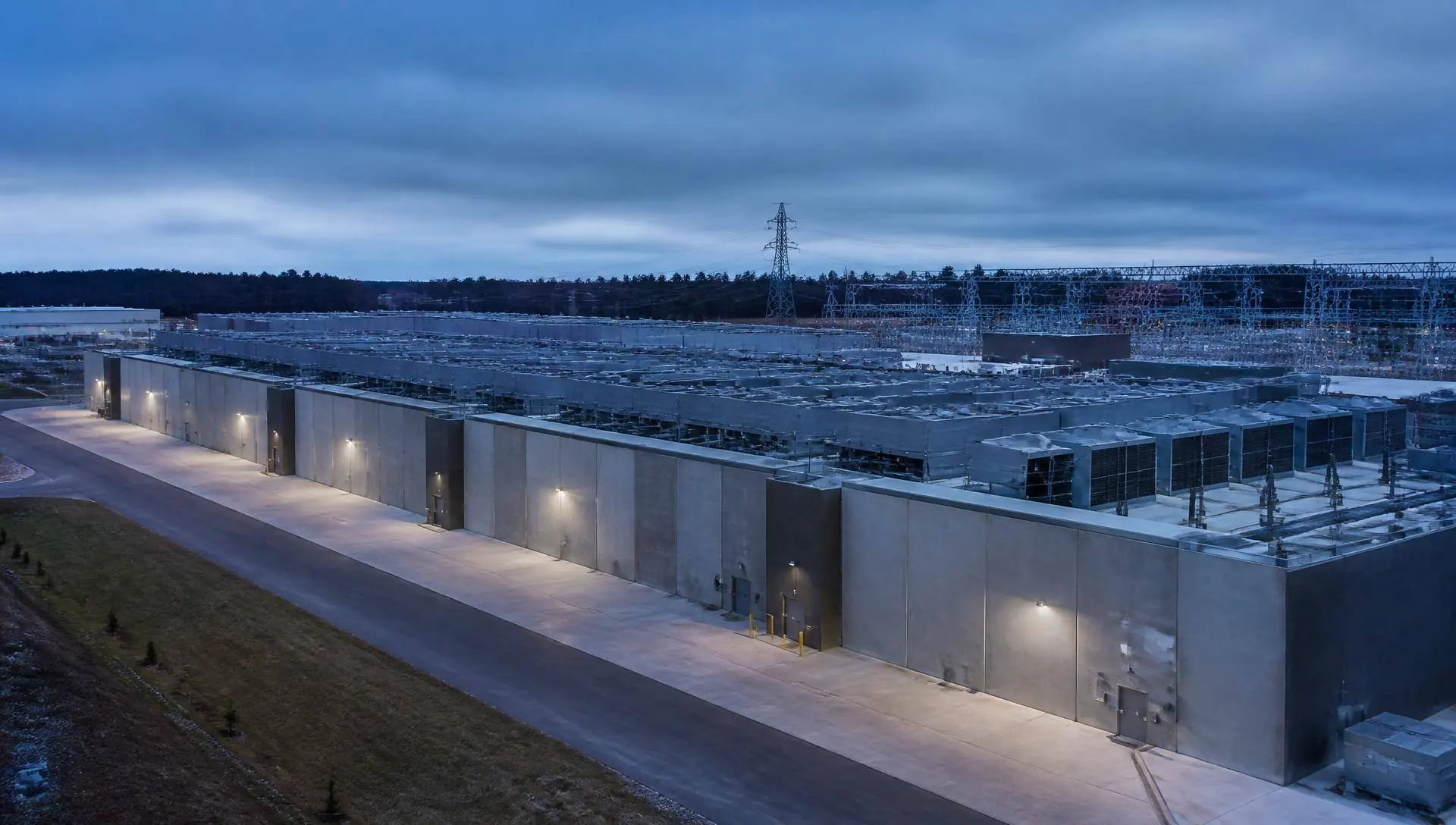
Engineering the Next Generation of AI Infrastructure
A global platform delivering modular AI data center infrastructure through an ecosystem of world class engineering, manufacturing, fabrication, thermal systems and project delivery partners.
Modular infrastructure capacity blocks
Manufacturing & delivery footprint
Typical program time-to-market
Faster site mobilization vs. stick-built
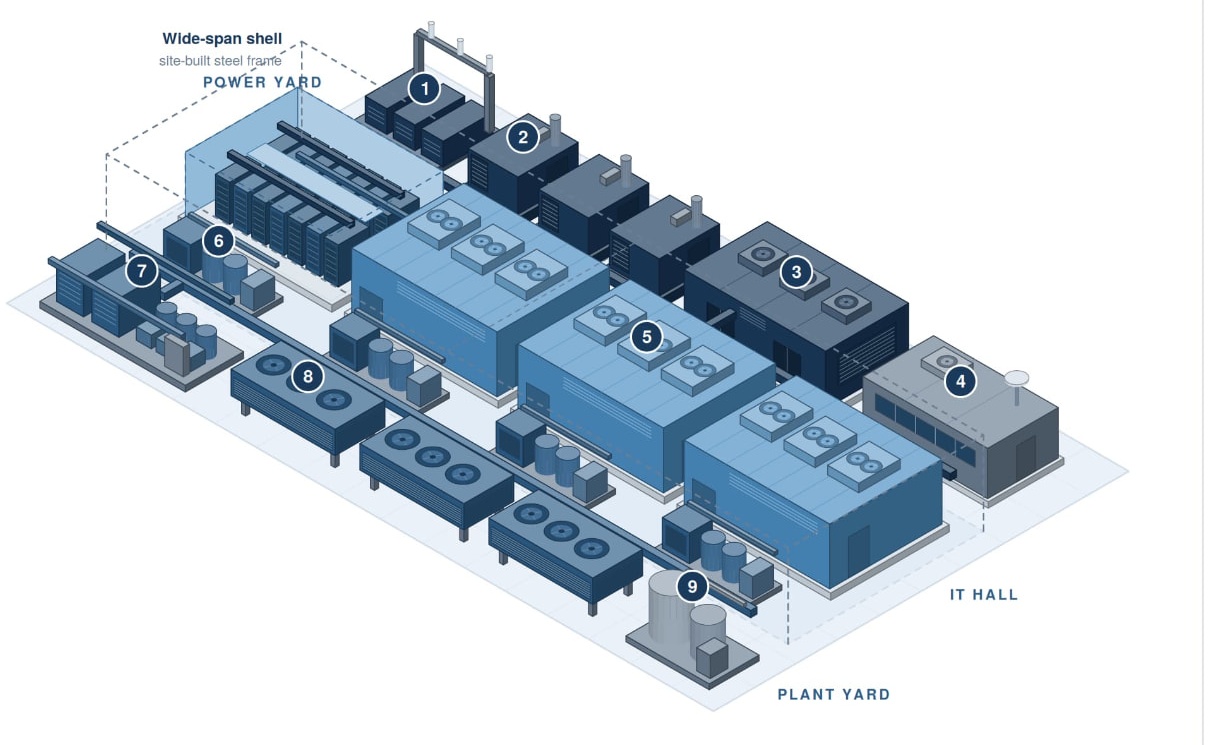
What is a module, what is a skid, what is built on site.
A single block, approximately 5 MW of IT load. No one factory builds every component. Each numbered element is delivered by a specialist partner — power, cooling, IT, support — and integrated under one engineering and delivery standard. Hover or select a component to isolate it in the block.
Scroll diagram horizontally →
 © 2026 Neura Infra — All rights reserved
Components
Colour key
Line routes
Power path
utility intake and MV switchyard → MV bus (generators stand behind the same bus) → transformer → e-house LV switchgear → UPS → overhead busway → rack PDU → server
Heat path
chip cold plate → technology cooling loop → CDU heat exchanger → facility water loop → cooling plant skid → plant yard headers → dry coolers → atmosphere. Water treatment holds loop chemistry and make-up volume.
Site-built scope is limited to the wide-span steel shell, foundations and the connections between blocks. Everything numbered above arrives as a factory-tested module or skid.
Every block is sourced from a qualified specialist.
Infrastructure of this class is not built by one company. Each numbered block in the anatomy above is fabricated by a specialist qualified for that scope, then integrated against a single set of interfaces. Partners are referenced by capability and certification rather than by name.
Qualification gates — select to read
Partner identities, certificates and audit records are disclosed under NDA during technical qualification. No block is released to fabrication before its specialist has cleared every gate above.
Conventional vs. full modular delivery.
Indicative benchmark for investor and program planning. Figures are approximate and vary by location, scope, permitting, supply chain and design standard.
Time to IT-ready
Conventional
18–24 months
Modular
12–18 months
7–9 months earlier capacity
Total program incl. permitting
Conventional
30–35+ months
Modular
24–30 months
6–12 months faster to revenue
On-site MEP labour
Conventional
~12,000 hours/MW
Modular
~4,500 hours/MW
Approx. 63% reduction
Capex per MW
Conventional
~$14.6M
Modular
~$13.5M
Roughly 8% lower
White-space fit-out
Conventional
~15 weeks
Modular
2–3 weeks
Up to 80% faster
Licensed electrician hours
Conventional
High dependency
Modular
Up to 85% lower
Factory wiring, not site labour
This comparison is for illustrative purposes only and does not constitute a guaranteed project outcome. Actual schedule, labour, cost and deployment outcomes vary by geography, utility availability, site conditions and project scope. Comparison methodology and reference metrics based on research by Semi Analysis.
Download benchmark PDF